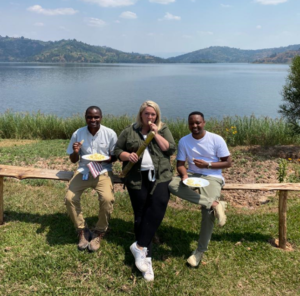

Congo Nile Trail Hiking
“Goodmorning!”
I hear children shout in our direction. We are walking through a plantain field and the shade offered by the large crop helps us regain strength after hiking one of Rwanda’s thousand hills. Suddenly I can see the children in the distance. They are running towards us, waving and shouting.
“Goodmorning!” “Goodmorning!”
We respond by saying “Muraho!” (Hello in kinyarwanda). Upon seeing their smiles we immediately forget our tired legs and feel motivated to continue our hike along the Congo Nile Trail!
–
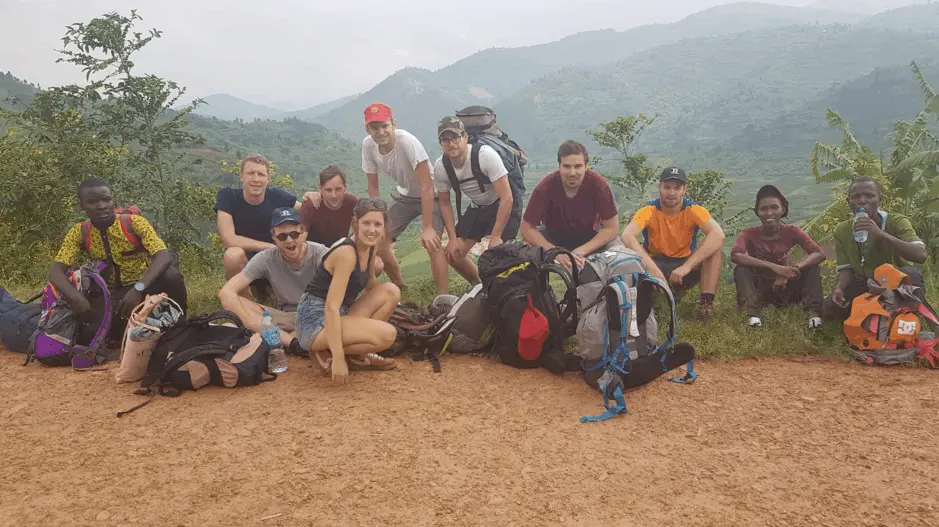
In January 2019 I hiked a part of the Congo Nile Trail in Rwanda with a group of friends. The trail follows the eastern shore of the spectacular Kivu Lake and offers more than just a great hiking experience. In this short blog post I will list some reasons why this is an absolute must when visiting Rwanda.
The Hike
There is not just one way of hiking the Congo Nile Trail. Many small trails connect the different villages and depending on your guide, you might take a different route. The main trail follows a dirt road that circles though the rolling hills. On this road, the trail is marked with directions. This road allows doing the trail with a mountain bike as well. When hiking with a guide you will spent most of your time following smaller trails that cross trough fields, hills and rivers. We hiked from Kibuye to Gisenyi in four days. The hike is demanding, with large distances (one day of 30km) and quite some elevation. You could make the hike easier however by spreading it over 5-6 days or shortening some days by taking a boat or moto taxi. The trail is in good condition and safe to hike, although I would recommend a guide if you want to take the smaller adventurous paths.
The Way of Living
In Rwanda, you are never alone. Along the trail, you will see many Rwandese living and working in the fields and villages. In this rural setting, you see a completely different lifestyle than in Kigali. At first, people might appear shy and reluctant; however, this changes when they get to talk about their craft or nature. Thanks to our guide, we were able to watch a beekeeper perform his craft in a traditional way, using hollowed out tree trunks. Most communities are highly self-sustaining, a way of living from which we can all learn. Nevertheless, there is also poverty, but the living standards seem to be improving.
The Guest Houses
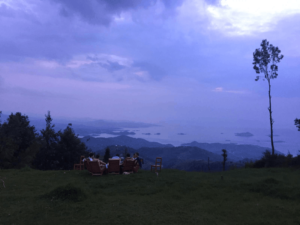
Several guest houses are located along the trail. All places were perfect to relax after a tough hiking day, and they all had decent beds with mosquito nets and a nice dinner & breakfast. I especially remember the guest house in Bumba. We were welcomed with great hospitality and a truly astonishing view (see below). Some places might not have a hot water shower, but you can always ask for a basin filled with hot water. There is also the possibility to choose hotels that offer more luxury, although I found the guesthouses very charming.
The Experience
As mentioned before, the Congo Nile Trail is more than just a hike. You get to experience Rwanda in a very non-touristic way, meet people, try local food and discover a different culture. It was the highlight of my trip to East Africa, and I hope to hike it again in the future.
By Pieter Nachtergaele, 11/12/2021